

Improvised Creatures
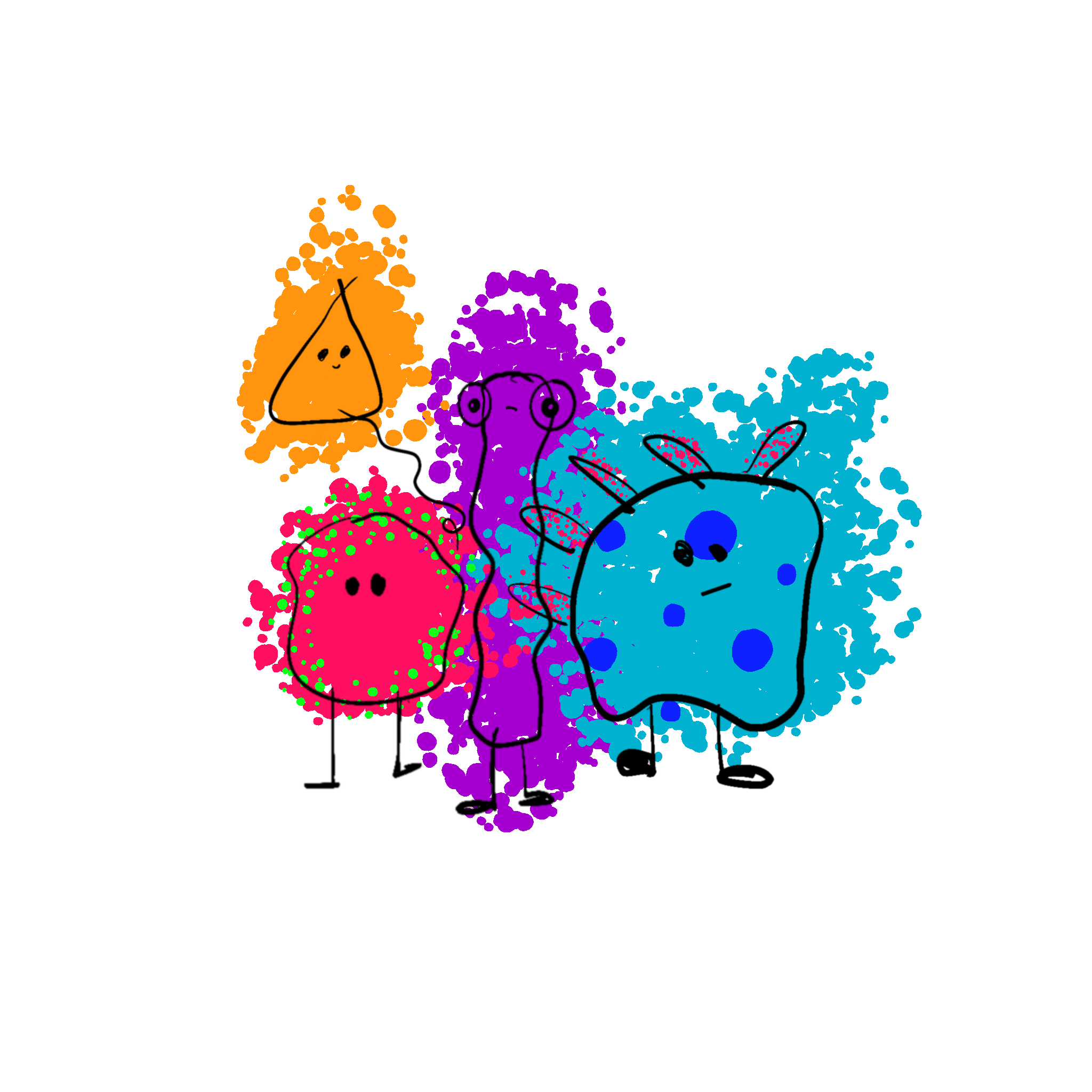
Welcome to a space at the intersection of art and research, showing creativity as a valuable form of intellectual exploration. This website, an extension of my thesis, presents a series of creative works that embody the sometimes ineffable and intangible forms of knowledge. Here, each creature is both a process and artifact of improvised imaginative experimentation, demonstrating the value of art and creative exploration as methods for producing new ways of knowing. This platform is an invitation to think and feel differently, to feel differently about thinking.
Most creatures that you will find here came to be prior to, or in tangent with, accompanying text and were inspired by various philosophies, non-fiction and science-fiction works, and theoretical concepts. All creative processes have served as methods to further inquiry, intensify experience, and deepen the conceptualization of ideas. There is no wrong way to engage with this site. Explore the sections as you see fit. Each creature is in process and will be worked with as I analyze data and write my thesis. Feel free to check-in periodically.
It’s me, Allie!
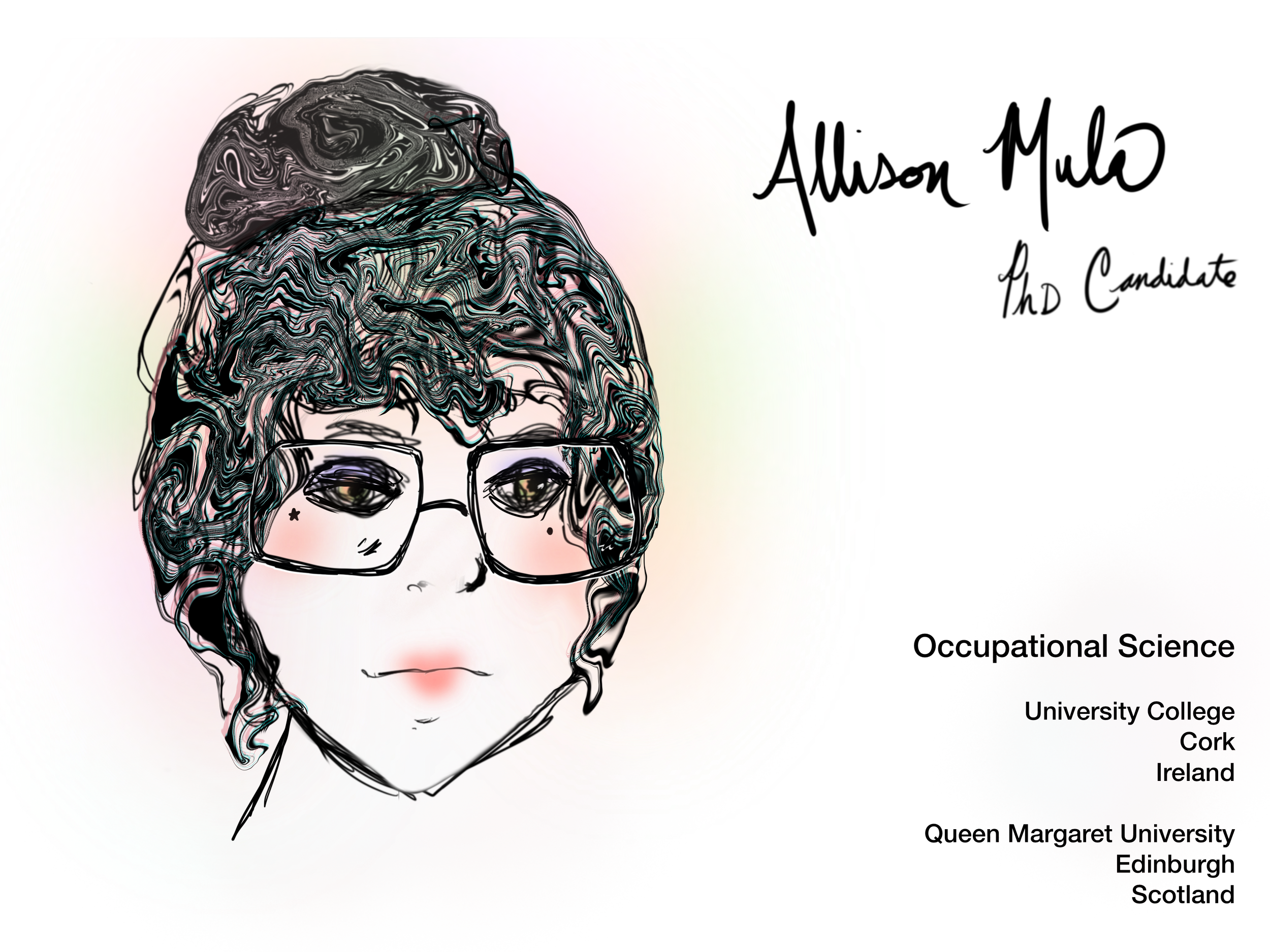
Allison Mula (she/her) is a PhD candidate in Occupational Science, completing her research degree through a joint arrangement between University College, Cork, and Queen Margaret University, Edinburgh. She holds a Clinical Doctorate in Occupational Therapy from Boston University, along with graduate and undergraduate degrees in Occupational Therapy and Occupational Science, and a minor in African American Studies from The State University of New York at Buffalo. Her work approaches children’s playful experiences through the metaphysics of Alfred North Whitehead’s philosophy of organism, with an emphasis on process, relation, and experiential emergence. Her research is grounded in a process-relational understanding of experience, informed by William James’s Radical Empiricism, as taken up within Whitehead’s conceptual architecture and developed through post-qualitative inquiry, post-structuralist theory, queer theory, feminist and Black feminist philosophy, and decolonizing perspectives. She examines how experiential events, particularly occasions of playful experience, emerge within dynamic relations of social, affective, and material conditions. Her research practice brings ethnographic engagement into conversation with creative practice methods, including sound, drawing, textile materials, and digital artifacts, to follow how events gather, compose, and transmit across organismic configurations. She is particularly attuned to questions of power (as experiential influence) within social dynamics and to the methodological possibilities opened by positioning neurodivergent modes of attention and associative creativity as epistemological tools.
-
· Process philosophy, with a primary grounding in Alfred North Whitehead’s philosophy of organism and an emphasis on experience as emergent, relational, and more-than-substantial
· Experiential approaches to social life that decenter the individual subject and attend to relations, conditions, and events
· Post-structuralist theory, particularly analyses of power, discourse, and social formations
· Feminist and Black feminist philosophy, and Queer Theory as resources for thinking experience, history, and institutional influences
· Decolonial approaches to knowledge production and educational practice
-
· Post-qualitative inquiry and methodological critique
· Non-representational and more-than-representational approaches to research
· Sensory, affective, and relational ethnographic practices
· Creative-practice research (applied to social sciences)
· Slow, process-oriented research methodologies
· Neurodivergent approaches to inquiry that value associative thinking, affective intensities, variation, and complex systems analysis
-
· Institutional power and the organization of educational and professional systems
· Decolonizing curriculum, pedagogy, and research practices
· Relational and affective ecologies
· Exploring the colonial origin of gender and the role of academia in its formation and proliferation
-
· Process-relational approaches to occupation grounded in experiential emergence
· Play as an event shaped by social, affective, and material conditions (non-developmental framings)
· Creativity and experience as unfolding, relational processes
-
· Neurodivergent Creativity & Associative Thinking: Demonstrating how non-linear cognition can open new analytic and conceptual possibilities.
· Inclusive Pedagogies: Designing classroom practices that support varied attentional rhythms, sensory profiles, and creative reasoning styles.
· Critical Disability & Neurodiversity Studies: Introducing theoretical frameworks that challenge normative models of cognition.